As cloud egress fees and variable monthly bills continue to rise, a growing number of engineering teams are asking a critical question: does every workload belong in the public cloud? The steady compute demands of databases, virtualization, and self-hosted AI inference have pushed many teams to compare high-performance bare metal against hyperscaler pricing. Dedicated servers give you single-tenant hardware, predictable costs, and full control of the stack. The hard part is choosing the right provider.
This guide compares ten dedicated server providers across the factors that matter in practice: server locations, hardware choices, network capacity, IP address options, support model, and who each provider suits best. Every company here has real strengths and real trade-offs, and we have tried to state both plainly.
01 Quick Picks: Which Provider Fits Which Need?
| Provider | Best For |
|---|---|
| Fit Servers | Global location coverage and flexible networking |
| Amazon Web Services (AWS) | Teams already built around the AWS ecosystem |
| OVHcloud | Private networking across multi-site data centers |
| Hetzner | Budget-conscious technical users wanting cheap dedicated servers |
| Leaseweb | Hybrid setups combined with a global CDN |
| Hivelocity | API-driven bare metal deployment in many cities |
| phoenixNAP | Infrastructure as Code (IaC) on hourly billing |
| Liquid Web | Fully managed support and hands-off administration |
| IONOS | Consolidating domains, cloud, and bare metal vendors |
| Atlantic.Net | Compliance-focused (HIPAA/ePHI) workloads |
02 How We Evaluated These Providers
This is a research-based comparison, not a lab benchmark. We reviewed each provider's published documentation, product pages, and independent coverage, and we scored them on six practical criteria:
Locations
Where can you deploy, and how close is that to your users?
Hardware
Which processors, memory, storage, and GPU options are offered?
Network
What port speeds, unmetered dedicated server terms, and DDoS protection are included?
IP Addressing
Can you get additional IPv4 blocks, and does the provider support BGP?
Support and Management
Is the service unmanaged, managed, or both?
Value
How transparent are pricing, setup fees, and contract terms?
We did not run performance tests, so we do not publish benchmark numbers. Treat the figures below as the providers' own published claims, and verify anything business-critical before you commit.
03 Top 10 Dedicated Server Providers for 2027
Fit Servers: Best for Global Reach and Flexible Networking
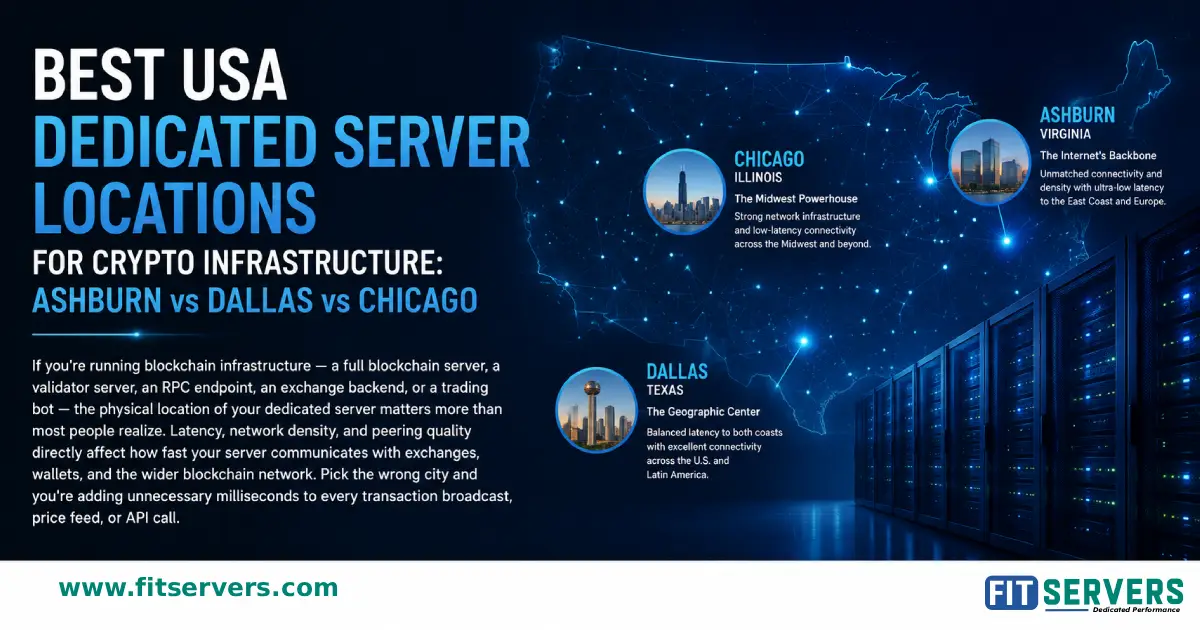
Fit Servers offers bare-metal dedicated servers, GPU servers, storage servers, game server hosting, and colocation. The company serves customers across a massive network of over 250 global points of presence (PoPs) and bare-metal locations, which makes it a strong option when your users are spread across several regions or sit in markets that larger providers do not cover.
- Wide location choice: Deploying closer to your users reduces latency, and a broad footprint gives you more options than providers limited to a few regional hubs.
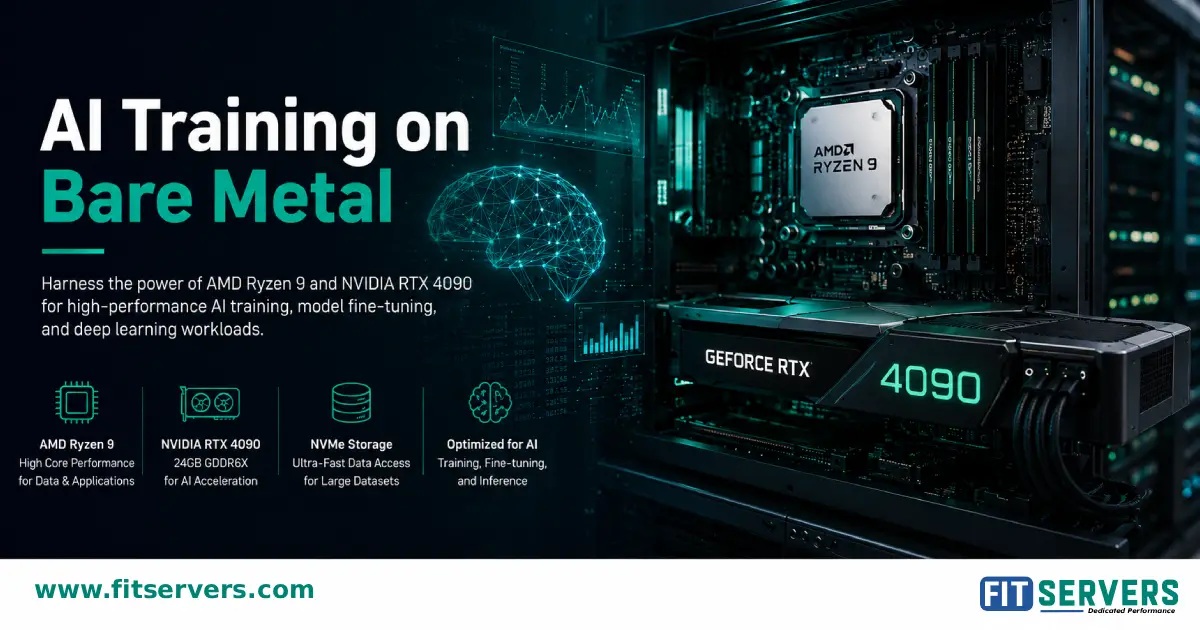
- High-frequency CPUs: Configurations with the AMD Ryzen 9 7950X and 7950X3D suit workloads that depend on single-core speed, such as game servers, Android emulation, and real-time API inference.
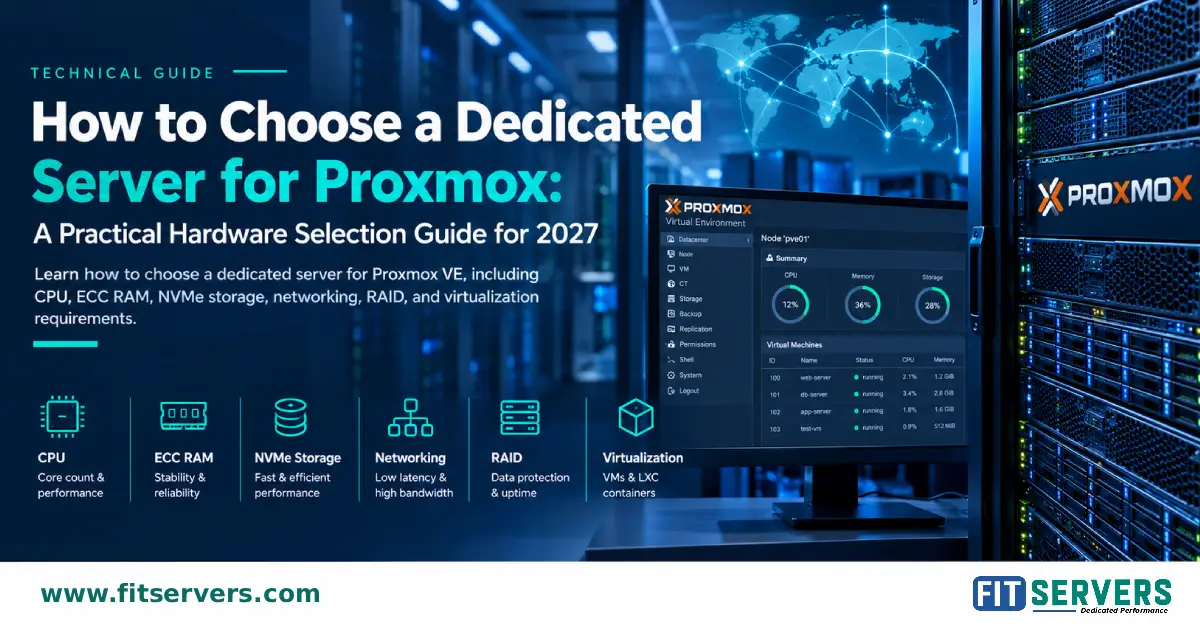
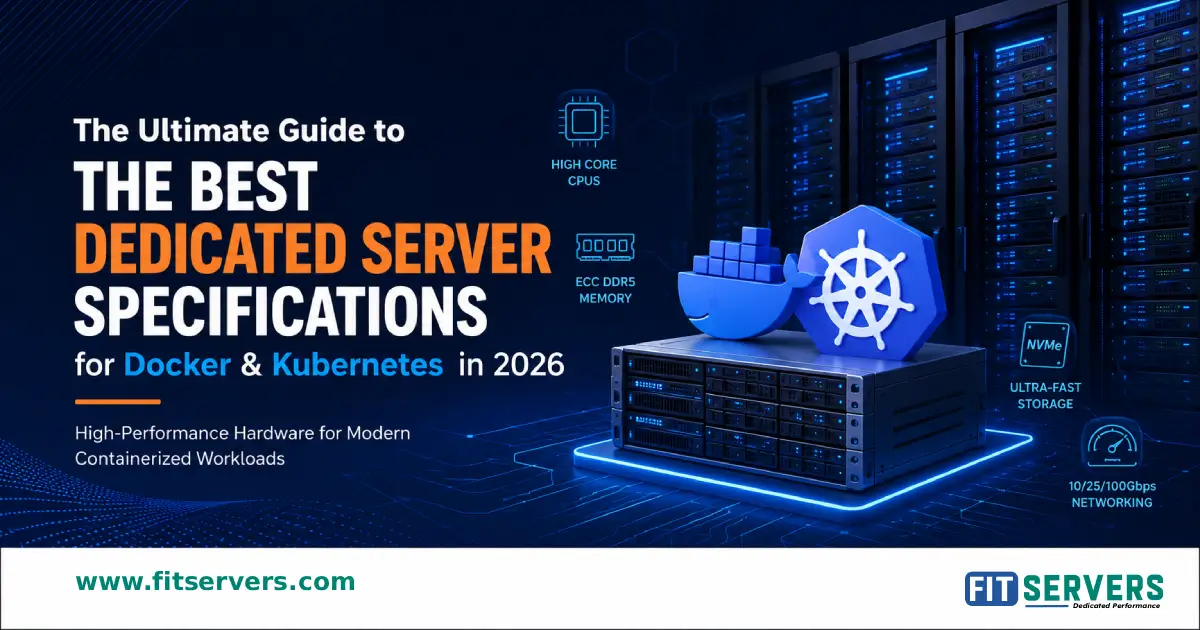
- High-core-count platforms: Dual AMD EPYC 9454 configurations provide 96 cores and 192 threads, with up to 1 TB of DDR5 memory, which suits Proxmox clusters, container platforms, and large databases.
- GPU options: Dedicated AMD Radeon Pro WX 9100 GPUs are available for OpenCL workloads such as virtual desktop infrastructure and video encoding.
- Network flexibility: Customers can add /29, /28, /27, and /24 IPv4 subnets, bring their own IP space, and use BGP sessions. Unmetered port options run from 1 Gbps up to 100 Gbps on supported ports, and DDoS mitigation is included.
Amazon Web Services (AWS) EC2 Bare Metal: Best for AWS-Centered Teams
Amazon Web Services offers EC2 instance types with a “.metal” suffix, such as m5.metal, that give your applications direct access to the underlying hardware. They run inside the AWS cloud, connecting to the rest of your AWS environment through the same Virtual Private Cloud (VPC) networking you already use.
- Ecosystem integration: If your data lives in services such as Amazon RDS or DynamoDB, keeping a heavy compute tier on bare-metal instances avoids a cross-provider network hop.
- Nitro System: AWS builds these instances on its Nitro platform, which offloads virtualization functions to dedicated hardware.
- On-demand model: You can provision and release instances through the same tools and billing you use for the rest of AWS.
OVHcloud: Best for Private Networking Across Data Centers
OVHcloud is a massive European provider that designs and builds much of its own infrastructure. Its dedicated servers come in several ranges, from entry-level to high-grade enterprise models.
- vRack private network: OVHcloud's vRack lets you link servers into a private network that can span multiple data centers. It is included with most dedicated ranges (excluding Rise and Game ranges).
- Included protection and traffic terms: Anti-DDoS protection is included on all dedicated servers. Public traffic is unlimited and unmetered in most regions (with exceptions such as the Asia-Pacific region).
- Efficient cooling: OVHcloud uses proprietary water cooling in many of its facilities, which supports highly competitive pricing.
Hetzner: Best for Budget-Conscious Technical Users
Hetzner is a German provider with a massive following among developers and system administrators. Its dedicated server capacity is highly concentrated in Germany and Finland.
- Server Auction: Hetzner resells retired, previous-generation servers through a Dutch-style auction where prices step down over time. These cheap dedicated servers carry no setup fee and no minimum contract term, making them highly attractive for test labs, CI/CD runners, and backup storage.
- Low entry costs: For workloads that do not need the newest generation of hardware, auction machines can deliver incredible capacity for the money.
Leaseweb: Best for Hybrid Infrastructure and Content Delivery
Leaseweb is a Netherlands-based provider that combines dedicated servers with public and private cloud, colocation, and a proprietary content delivery network (CDN).
- Network scale: Leaseweb states that its network exceeds 10 Tbps of capacity and offers 99.99% core uptime.
- Global footprint: The company lists data centers across Europe, North America, Asia, and Australia.
- Mixed workloads: If you want bare-metal databases alongside cloud instances and CDN delivery from one vendor, this product mix is an excellent match.
Hivelocity: Best for API-Driven Bare Metal in Many Cities
Hivelocity focuses on dedicated servers that you can deploy and manage in a highly cloud-like way.
- Instant servers: The company offers pre-racked servers in more than 30 locations that you can provision and release on demand, with hourly billing available on instant configurations.
- Automation tools: A REST API, a Terraform provider, and Ansible integrations let you manage physical servers natively as code.
phoenixNAP: Best for Infrastructure as Code on Hourly Billing
phoenixNAP, based in Arizona, runs a platform called Bare Metal Cloud that treats physical servers as completely API-managed resources.
- Fast provisioning: Pre-configured servers can be deployed in as little as 60 seconds, depending on the operating system you choose.
- Automation support: It provides Terraform, Ansible, Pulumi, and Chef integrations, plus a robust CLI tool and SDKs.
- Hardware security features: Some instances feature Intel processors that support hardware enclaves like Intel SGX or TDX, which help protect data in use.
Liquid Web: Best for Fully Managed Support
Liquid Web is a US-based provider heavily focused on premium managed hosting. It owns and operates its data centers in Michigan and Arizona, alongside a facility in the Netherlands.
- Managed services: Liquid Web handles monitoring, security hardening, and software support, which is a lifeline for teams without in-house Linux or network administrators.
- Support guarantees: The company advertises a 59-second initial response for phone and chat, and a 59-minute response for helpdesk tickets.
IONOS: Best for Consolidating Vendors
IONOS is a large European provider that sells domains, hosting, email, and cloud services right alongside traditional dedicated servers.
- One account for many services: Small and mid-sized businesses can easily manage their domain names, web hosting, and backend servers from a single, unified billing relationship.
- Straightforward plans: Dedicated servers are offered in fixed configurations with clear monthly pricing across data centers in Europe and the United States.
Atlantic.Net: Best for Compliance-Focused Workloads
Atlantic.Net positions itself heavily around regulated industries, specifically healthcare and medical data.
- Compliance focus: The company heavily markets HIPAA-oriented hosting, which strictly suits applications that handle electronic protected health information (ePHI).
- Security services: Managed firewalls, encrypted storage, and audit-friendly practices are built directly into its regulated-industry offering.
04 What Is a Dedicated Server?
A dedicated server is a physical machine leased entirely to one customer. You receive the full processing power, memory, storage, and network capacity of that machine, with absolutely no other tenants sharing it. This is also commonly referred to as a bare-metal server.
The single-tenant design brings three practical benefits:
- Consistent performance: No neighboring customer (“noisy neighbor”) can consume your CPU cycles or disk bandwidth.
- Absolute control: You choose the exact operating system, hypervisor, and security configuration.
- Cost predictability: Most providers charge a fixed monthly rate, often with generous or unmetered bandwidth allowances.
The trade-off is responsibility. On an unmanaged server, you handle patching, monitoring, backups, and security. Managed plans shift some or all of that administrative burden to the provider for a fee.
05 Dedicated Server vs. Cloud: How to Decide
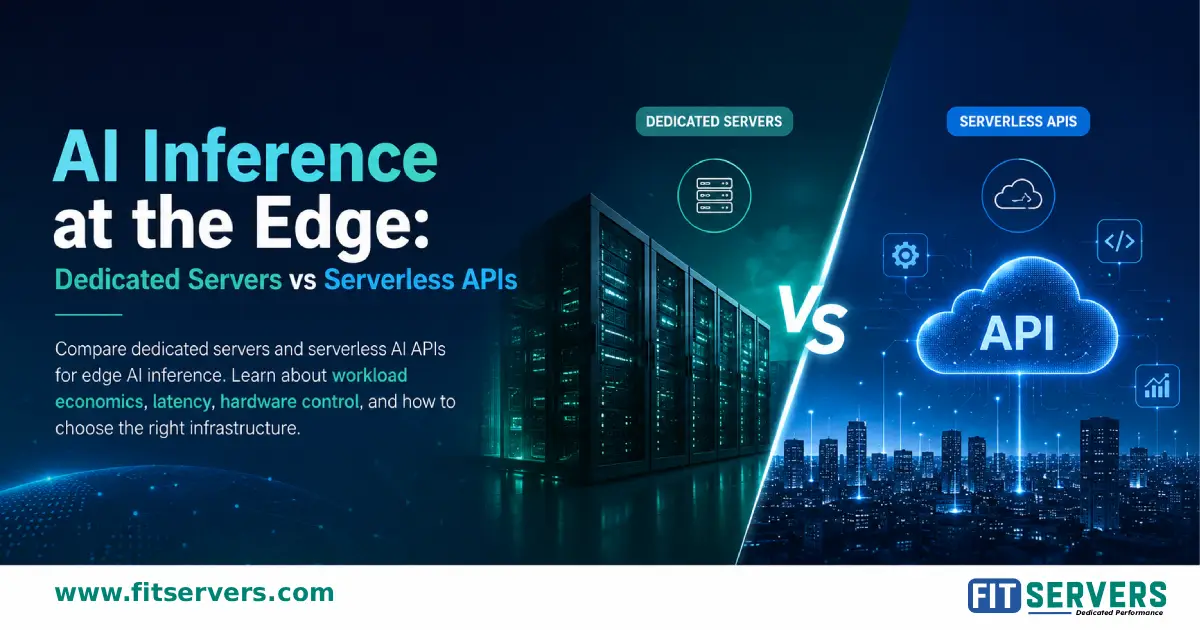
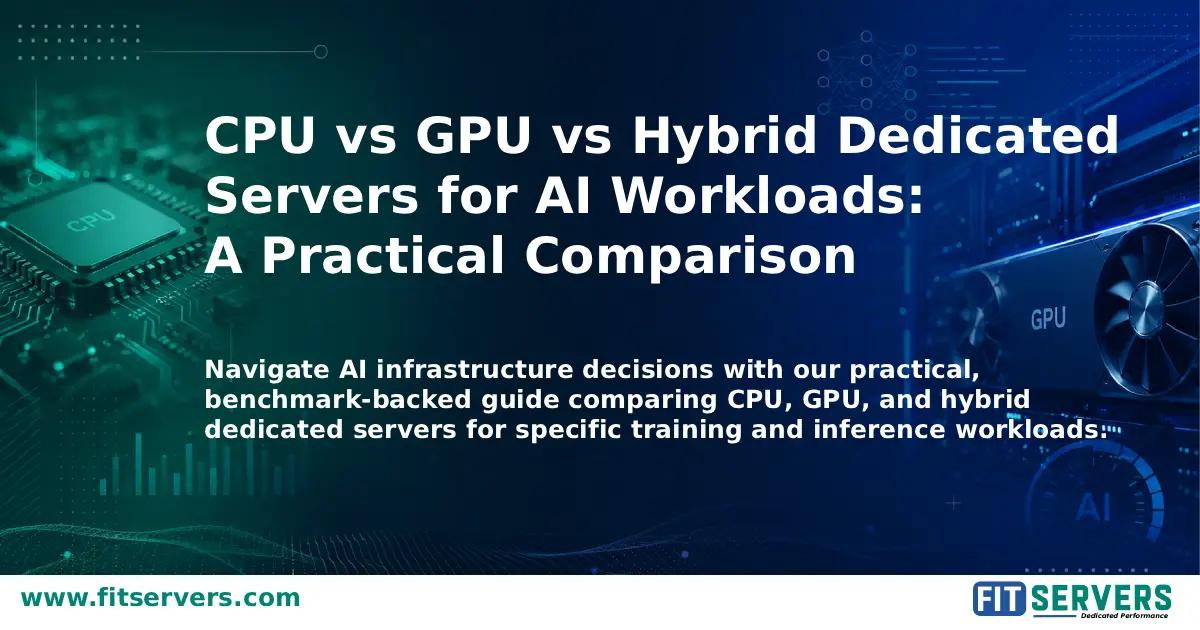
Cloud servers shine when demand is unpredictable, when you need to scale horizontally in minutes, or when you rely heavily on a provider's proprietary managed ecosystem. Dedicated servers tend to fit workloads that run steadily, such as production databases, game servers, heavy media processing, virtualization clusters, and self-hosted AI inference.
Public cloud is usually the better fit when demand is unpredictable and you need to scale in minutes.
Bare metal tends to win on cost and performance for databases, game servers, media processing, and virtualization.
If outbound bandwidth drives your cloud bill, unmetered or generous bandwidth terms can cut spend dramatically.
Many teams go hybrid: public cloud for spiky work, and high-performance bare metal for the stable core.
A useful test: Look at your last few monthly cloud bills. If a large share of the cost comes from always-on compute and outbound bandwidth (egress), a dedicated server may drastically lower your spend.
06 Hardware Standards to Look For in 2027
NVMe Storage
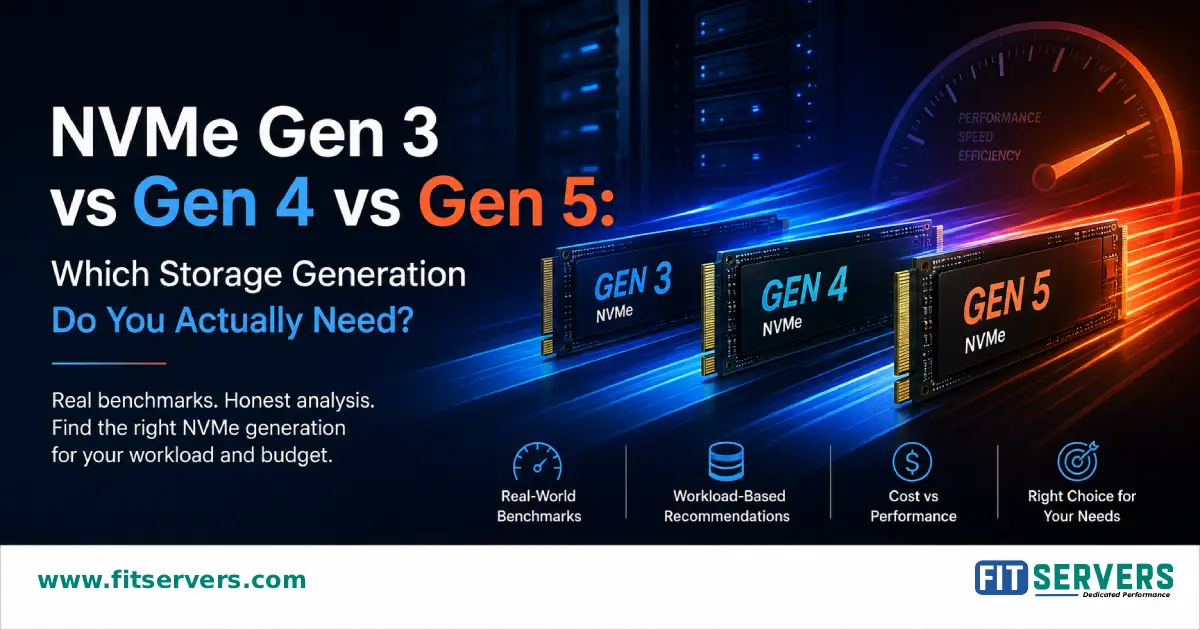
Databases and retrieval-augmented generation (RAG) workloads benefit from fast random reads and writes. Modern NVMe drives deliver far lower latency than aging SATA SSDs.
ECC Memory
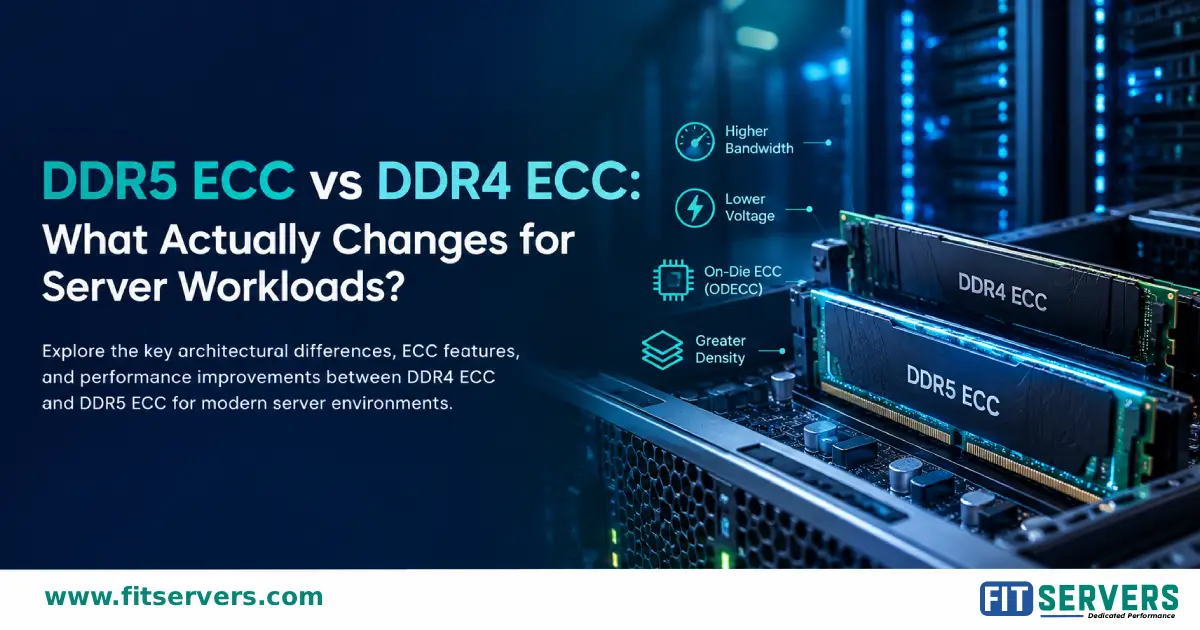
Error-correcting memory helps prevent silent data corruption in long-running systems, serving as a non-negotiable baseline for virtualization and databases.
Port Speed and Bandwidth Terms
A 1 Gbps port suits standard workloads, while storage clusters and media delivery may demand 10 Gbps or more. Read the fine print on “unmetered dedicated server” plans, because some providers apply hidden fair-use limits.
IPv4 Availability
Virtualization and hosting businesses need ample public addresses. Ask whether you can add subnets seamlessly and whether BGP and Bring-Your-Own-IP (BYOIP) are supported.
Out-of-Band Management
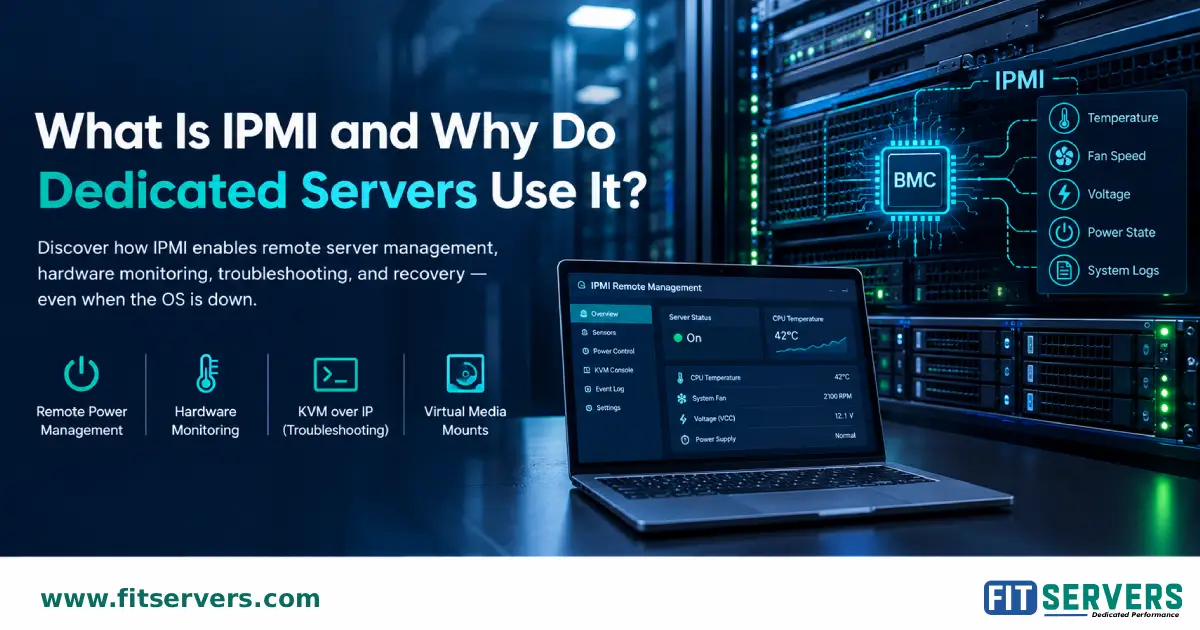
IPMI or KVM access lets you troubleshoot and fix a server remotely without waiting for the provider's data center technicians.
GPU Options
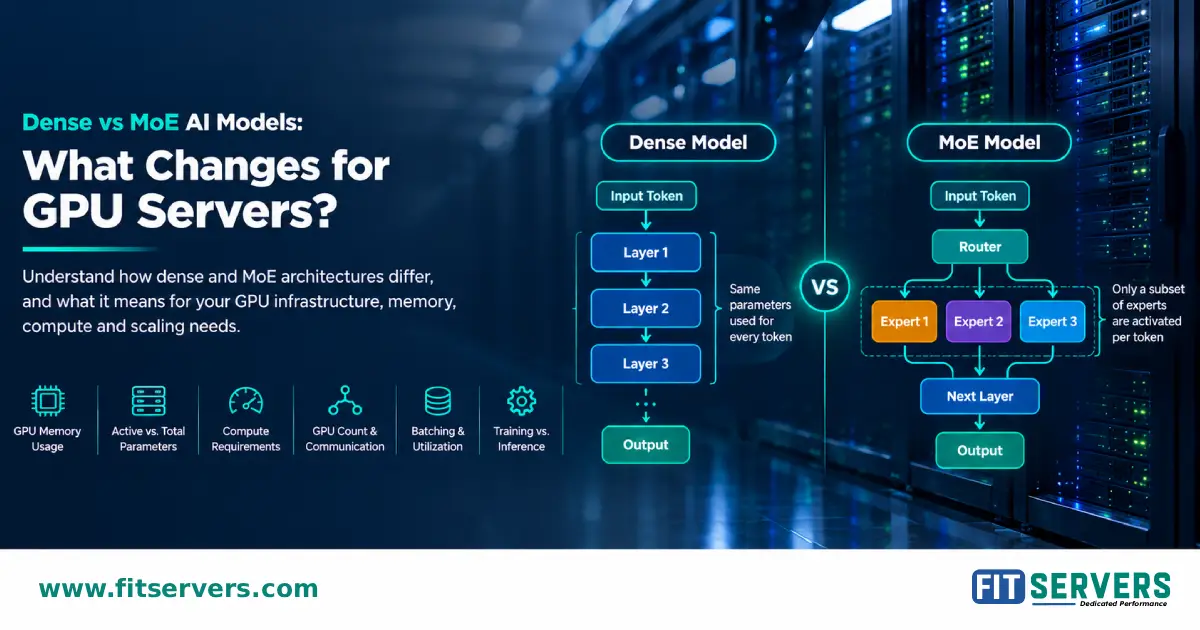
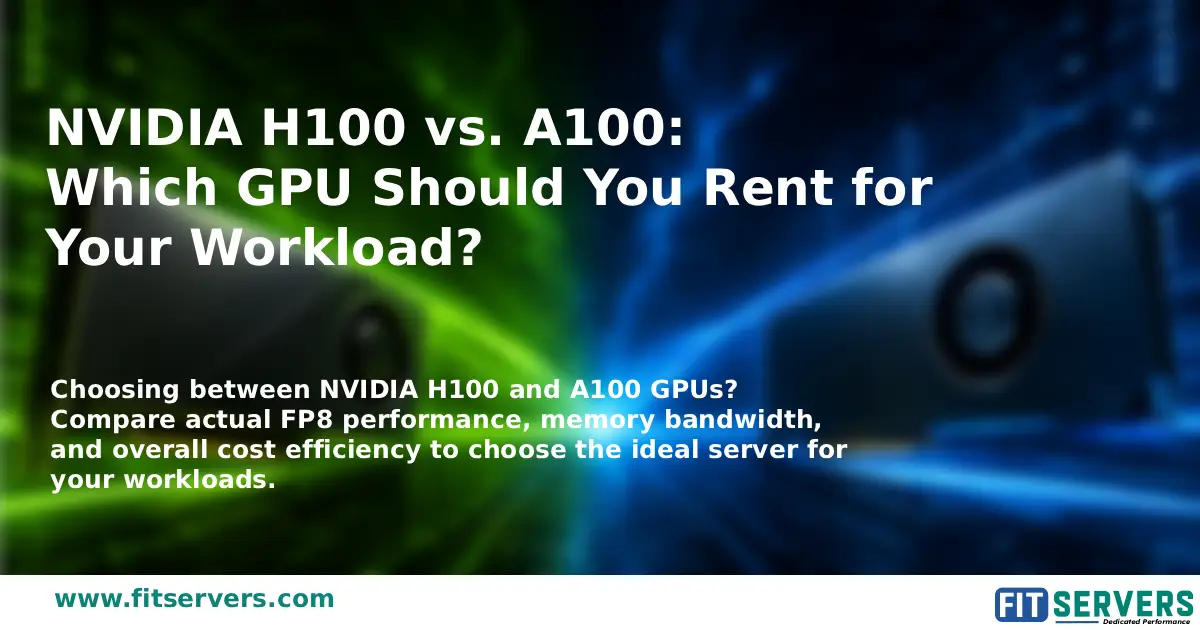
If you plan to run AI workloads, carefully check GPU memory, driver and software support, and stock levels, since enterprise GPU availability changes rapidly.
FAQ Frequently Asked Questions
Which dedicated server provider is best for a small business?
Is a dedicated server better than the cloud?
What is the difference between managed and unmanaged dedicated servers?
Can I run AI models on a dedicated server?
Do I need my own IP addresses?
Ready to Escape Unpredictable Cloud Billing?
The best dedicated server provider ultimately depends on your workload, your technical team, and your users. Pick a managed provider if you want hands-off operations, an API-driven platform if you automate everything as code, and a globally distributed bare-metal provider if latency matters across several international regions. Whichever you consider, compare current specifications and prices, read the SLA carefully, and test with a small deployment before you migrate production systems.
Ready to gain full control of your infrastructure? Explore Fit Servers' high-performance bare-metal configurations and deploy in your preferred region today.