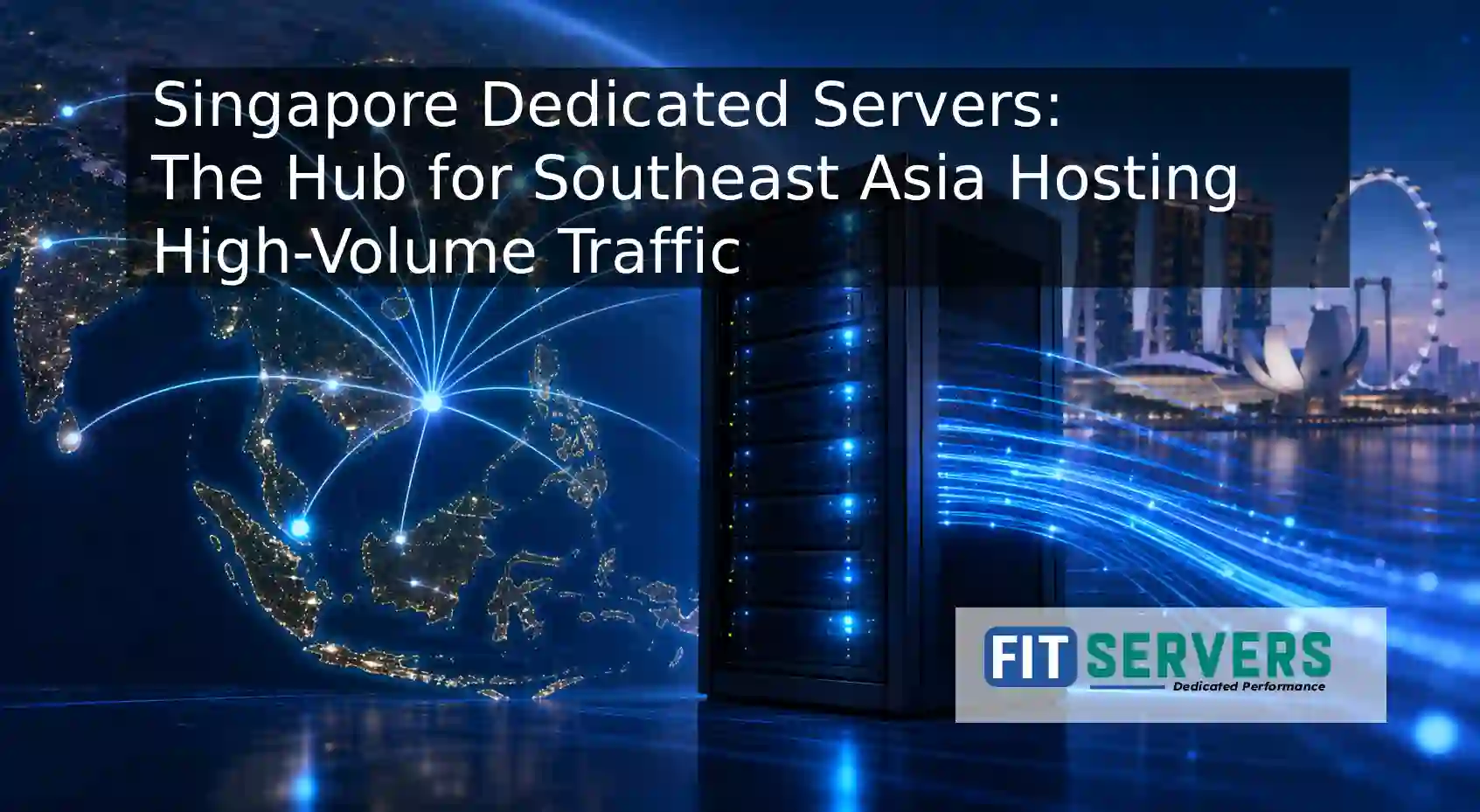
Singapore Dedicated Servers: The Hub for Southeast Asia Hosting High-Volume Traffic
The digital economy in Southeast Asia (SEA) is expanding at a breakneck pace. With over 400 million internet users spread across Indonesia, Malaysia, Thailand, Vietnam, and the Philippines, the demand for high-performance digital infrastructure has never been greater. For enterprises, gaming companies, fintech applications, and high-volume e-commerce platforms, the foundation of this infrastructure relies on one critical asset: Singapore dedicated servers.
But why is Singapore the undisputed epicenter for data and networking in the APAC region? And how does securing a bare-metal machine in this city-state translate to better user experiences and increased revenue?
In this comprehensive guide, we will explore the architecture of SEA hosting, dive deep into the mechanics of Singapore server latency, and explain why upgrading to a dedicated server infrastructure in Singapore via Fit Servers is the strategic move your business needs to handle high-volume traffic.
1. Why Singapore is the Undisputed Tech Hub of Southeast Asia
To understand the value of a dedicated server in Singapore, you must first understand the geographical and infrastructural advantages of the country. Unlike cloud instances that share resources, a dedicated server gives you absolute control over the physical hardware. When that hardware is located in Singapore, you unlock a specific set of regional advantages.
The Submarine Cable Advantage
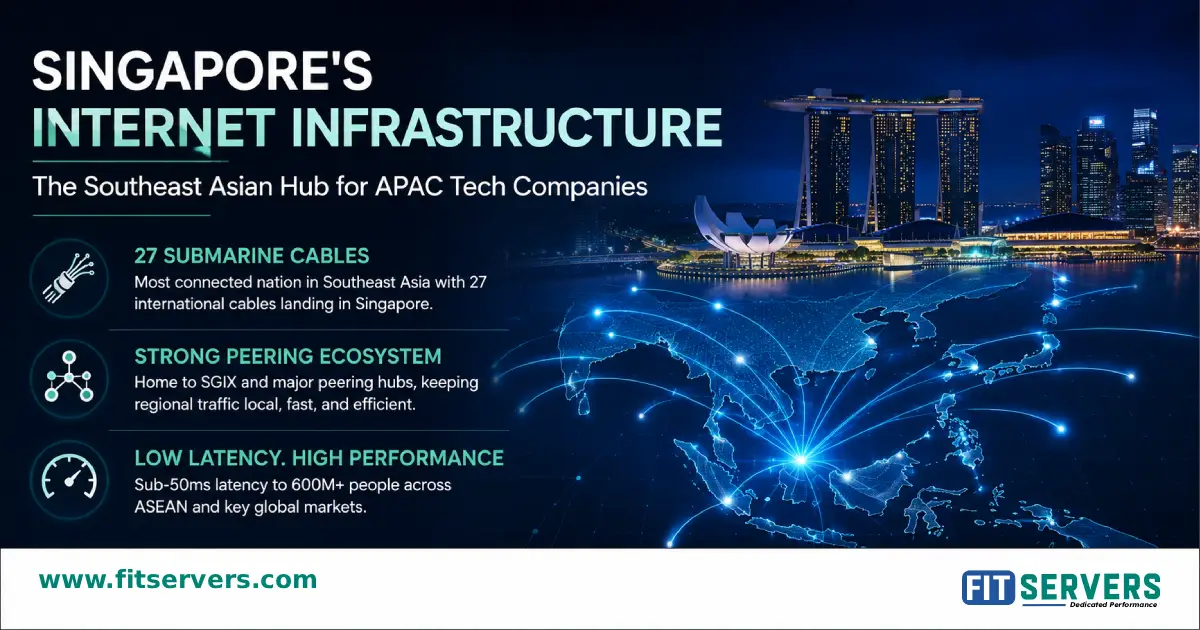
Singapore is one of the most densely connected countries in the world. It serves as the primary landing point for dozens of international submarine cable systems, including the Asia Pacific Gateway (APG), the South-East Asia Japan Cable (SJC), and the SEA-ME-WE (South East Asia–Middle East–Western Europe) networks.
This dense mesh of fiber optics means that data routed through a Singapore data center doesn't have to bounce through multiple global nodes to reach a user in Jakarta or Manila. It takes a direct, high-speed aquatic route.
Political and Environmental Stability
When hosting high-volume applications, uptime is paramount. Singapore is geographically shielded from major natural disasters like earthquakes and typhoons, which frequently disrupt infrastructure in neighboring countries. Furthermore, strict data privacy regulations and a pro-business regulatory environment make it a safe harbor for enterprise data compliance.
2. Unpacking "Singapore Server Latency": The Speed Advantage
In the realm of SEA hosting, latency is the silent killer of user retention. Latency—the time it takes for a packet of data to travel from the user to the server and back—is directly tied to physical distance and routing efficiency.
When you deploy Singapore dedicated servers, you are utilizing the most optimized routing paths in the Asia-Pacific region. Here is a realistic look at average ping times (latency) you can expect when routing traffic from a highly optimized Singapore data center to neighboring countries:
- Singapore to Malaysia (Kuala Lumpur): ~5ms to 10ms
- Singapore to Indonesia (Jakarta): ~15ms to 20ms
- Singapore to Thailand (Bangkok): ~25ms to 35ms
- Singapore to Vietnam (Ho Chi Minh City): ~30ms to 40ms
- Singapore to Philippines (Manila): ~35ms to 45ms
The Impact of Low Latency on High-Volume Traffic
When your platform is handling thousands of concurrent connections, every millisecond counts. High latency causes TCP bottlenecks, where the server spends too much time waiting for packet acknowledgments, eating up valuable RAM and CPU cycles. By utilizing local SEA hosting, your Singapore dedicated server can process, serve, and close connections faster, drastically increasing your overall server throughput and capacity for high-volume traffic.
3. High-Volume Use Cases: Who Needs a Singapore Dedicated Server?
Not every website requires a dedicated machine. However, if your business falls into one of the following categories, migrating to a dedicated environment in Singapore is not just an upgrade; it is a necessity.
A. High-Frequency Trading and FinTech
In the financial sector, latency arbitrage means milliseconds can cost millions. Forex trading platforms, crypto exchanges, and mobile banking apps require instantaneous data execution. A bare-metal server in Singapore places your trading algorithms physically closer to the major Asian financial exchanges, offering the microsecond execution speeds required for competitive trading.
B. Multiplayer Gaming and Esports
For multiplayer games (FPS, MOBA, MMORPGs), player experience is entirely dictated by ping. If an Indonesian player has a 120ms ping and a Malaysian player has 20ms, the game is fundamentally broken. Singapore dedicated servers act as the great equalizer for SEA gaming. By hosting the game logic on a central Singapore server, developers can ensure a level playing field with sub-40ms latency for nearly the entire Southeast Asian player base.
C. Streaming Media and IPTV
Delivering 4K video content to high volumes of concurrent users requires massive bandwidth and raw disk I/O performance. Dedicated servers equipped with NVMe SSDs and unmetered 10Gbps or 40Gbps uplink ports in Singapore ensure that content is delivered seamlessly without buffering, circumventing local ISP bottlenecks in developing SEA nations.
D. E-Commerce and Mega-Sale Events
Platforms targeting the SEA market frequently experience massive traffic spikes during double-day sales (e.g., 11.11, 12.12). A dedicated server ensures that your database queries aren't slowed down by "noisy neighbors" on a shared cloud node, preventing cart abandonment and database crashes during peak checkout times.
4. Key Hardware and Network Features to Look For
If you are evaluating Singapore dedicated servers for your enterprise, simply picking a physical machine isn't enough. The underlying network and hardware architecture must be engineered for enterprise-grade performance. Here is what you should expect from a premium provider like Fitservers:
- 100% Dedicated Resources: No hypervisors overhead, no shared CPU cycles. You get absolute access to the latest Intel Xeon or AMD EPYC processors.
- Enterprise NVMe Storage: For high-volume database queries (like MySQL or PostgreSQL), standard SSDs will bottleneck. NVMe drives communicate directly with the PCIe bus, offering up to 6x the read/write speeds of SATA SSDs.
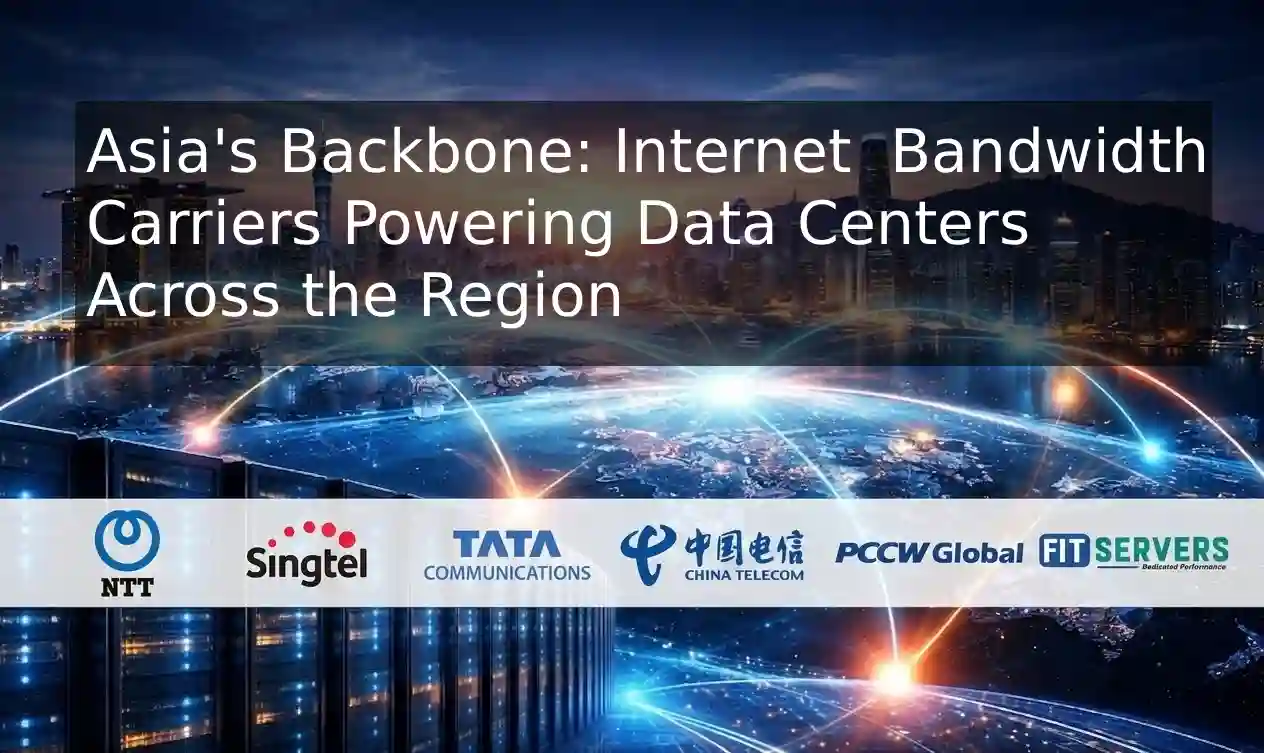
- BGP Optimized Routing: The best SEA hosting utilizes Border Gateway Protocol (BGP) across multiple Tier-1 transit providers (like Singtel, NTT, and Tata Communications). If one network cable goes down, BGP automatically reroutes your traffic through the next fastest path, ensuring uninterrupted Singapore server latency.
- DDoS Mitigation: Southeast Asia is a frequent target for volumetric DDoS attacks. A robust dedicated server must sit behind edge-level DDoS protection capable of absorbing terabits of malicious traffic without dropping legitimate user connections.
5. Overcoming the Limitations of Cloud in Southeast Asia
Many startups default to public cloud providers. While the cloud offers easy scalability, it falls short for high-volume, consistent traffic.
- Bandwidth Costs: Cloud providers in the APAC region charge exorbitant outbound data transfer fees. If you are pushing terabytes of high-volume media or game data, a Singapore dedicated server with a flat-rate unmetered bandwidth plan will save your company thousands of dollars monthly.
- Resource Throttling: Cloud vCPUs are time-sliced. When you need sustained, 100% CPU utilization for intensive data processing, cloud platforms will often throttle your performance. A dedicated bare-metal server never throttles.
6. How to Choose the Right Provider for SEA Hosting
Choosing the right partner for your physical infrastructure is critical. At Fit servers, we engineer our Singapore dedicated servers specifically for clients who cannot compromise on performance.
When establishing your presence in the SEA region, look for:
- Immediate Provisioning: Fast deployment of bare-metal machines.
- Root Access: Total control over your OS, kernel, and software stack.
- 24/7 Remote Hands: A dedicated support team physically present at the data center to handle hardware replacements immediately.
- Transparent SLA: A guaranteed Service Level Agreement ensuring 99.99% network uptime.
Conclusion: Securing Your Foothold in Southeast Asia
Southeast Asia is rapidly becoming the most dynamic digital market on the planet. To capture and retain this massive audience, you must deliver content, applications, and services with blistering speed and unbreakable reliability.
Investing in Singapore dedicated servers is the most effective way to achieve this. By capitalizing on unmatched submarine connectivity, bypassing shared infrastructure bottlenecks, and securing ultra-low Singapore server latency, your business will be perfectly positioned to dominate the high-volume SEA hosting landscape.
Ready to scale your infrastructure?
Explore our high-performance Singapore Dedicated Server plans at Fitservers today and give your users the flawless experience they demand.