Introduction: The Enterprise Shift Back to Bare Metal
In an era where cloud computing dominates the tech conversation, a silent but massive migration is occurring among high-level enterprise architects. Businesses running resource-intensive applications, handling massive database queries, or training complex Artificial Intelligence models are realizing a hard truth: virtualized, multi-tenant cloud environments often lead to unpredictable performance and runaway costs. The solution for serious workloads? A return to the raw, unshared power of bare-metal dedicated servers.
However, simply renting hardware is only half the battle. The physical location of your infrastructure dictates network latency, disaster resilience, and the overall end-user experience. For businesses serving the North American East Coast, the Midwest, and Latin America (LATAM), one city has emerged as the undisputed champion of telecommunications: Atlanta, Georgia. In this comprehensive guide, we will explore the technical, geographical, and economic reasons why migrating to premium Atlanta dedicated servers is the most strategic infrastructure decision your business can make this year.
1. The Strategic Geography of Atlanta: A Global Connectivity Hub
When evaluating data center locations, network engineers look for the perfect intersection of fiber-optic density, geographical safety, and power grid stability. Atlanta perfectly balances these three critical pillars, offering advantages that coastal cities simply cannot match.
Atlanta is a Tier-1 telecommunications hub sitting at the crossroads of major North American fiber-optic paths. Direct connectivity to major regional Internet Exchanges, such as the Atlanta IX, ensures that data packets take the shortest, most efficient routes possible. For businesses targeting the heavily populated US East Coast and the industrial Midwest, Atlanta serves as an ideal central nexus. Furthermore, it acts as a primary, high-speed gateway for traffic routing south into the Caribbean and Latin America.
Coastal data centers in cities like Miami, Houston, or New York face an ever-present and escalating threat from hurricanes, storm surges, and coastal flooding. Atlanta is strategically situated inland. This geographical advantage drastically reduces the risk of natural disaster-related downtime. For enterprise businesses designing Disaster Recovery (DR) architectures or seeking a hyper-reliable primary deployment site, Atlanta's inland stability provides peace of mind that coastal hubs cannot offer.
Georgia boasts one of the most robust and diverse energy grids in the United States. Premium Atlanta data centers leverage this inherent stability and reinforce it with Tier III multi-layered redundancies. This includes N+1 Uninterruptible Power Supplies (UPS) and massive enterprise-grade diesel generators capable of sustaining facility operations indefinitely during localized grid failures.
2. Decoding Enterprise-Grade Hardware Configurations
The true advantage of a dedicated server lies in absolute hardware isolation. You are never competing for CPU cycles, RAM allocation, or disk I/O with "noisy neighbors." Top-tier providers in Atlanta offer highly customizable stacks tailored to exact operational requirements, utilizing only enterprise-grade silicon.
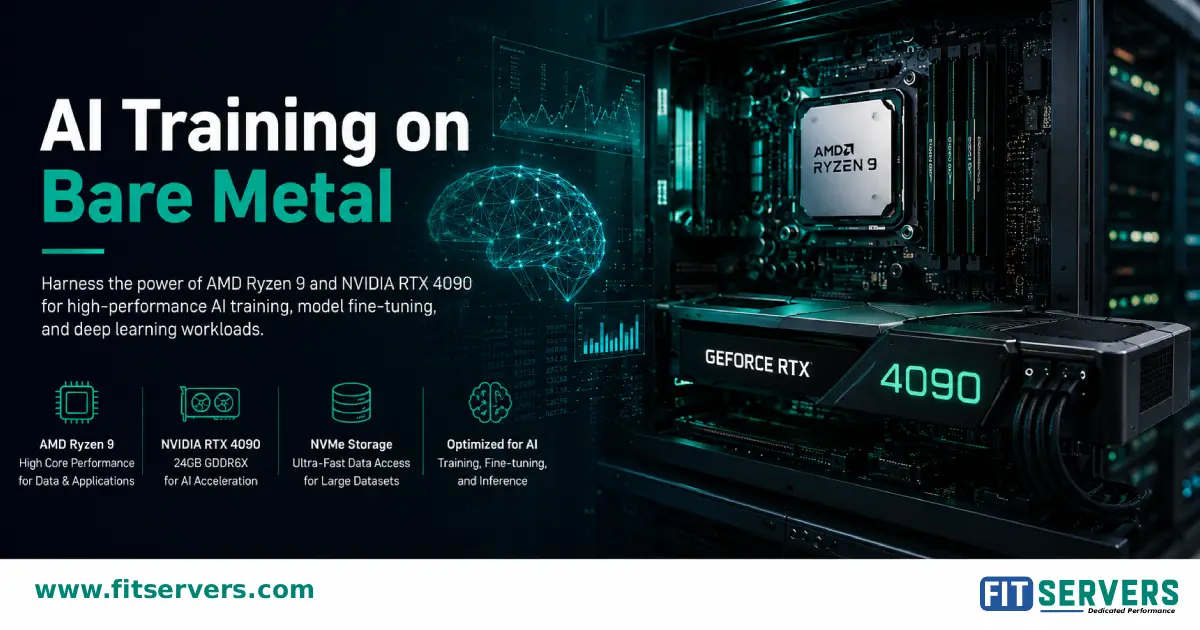
- High-Frequency Single-Threaded Workloads: For game servers, high-frequency trading (HFT) algorithms, or legacy applications that do not multi-thread efficiently, base clock speed is king. Servers powered by processors like the AMD Ryzen 9 7950X (boosting up to 5.7 GHz) or Intel Xeon E-Series (such as the E-2286G) deliver blistering single-core performance.
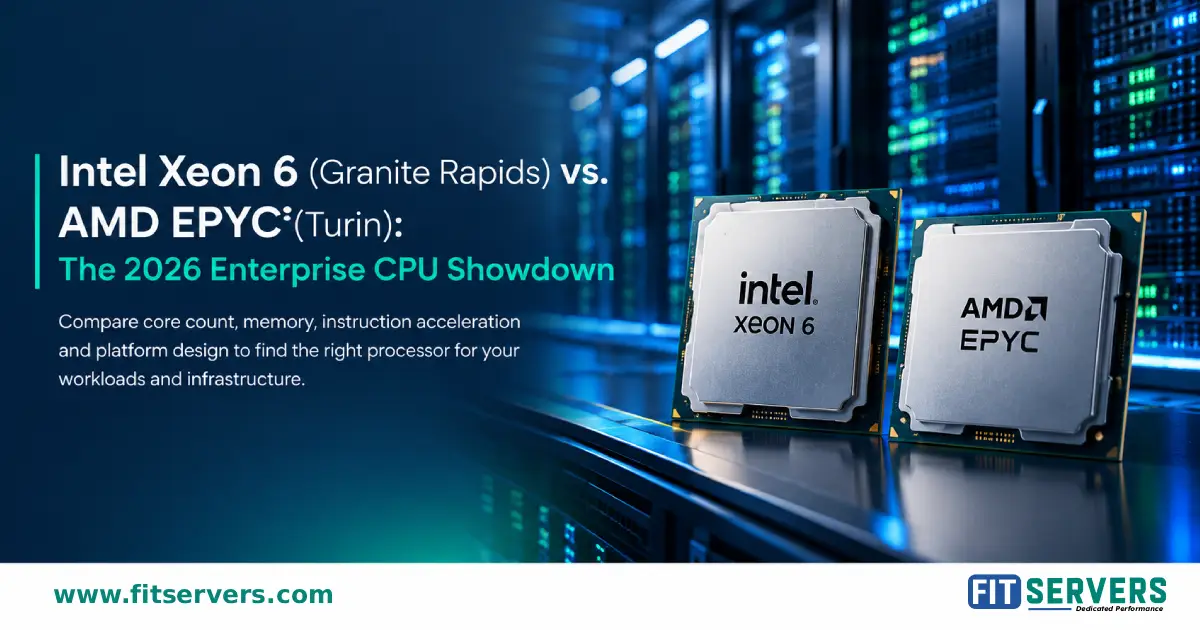
- Massive Multi-Core Virtualization: For hypervisors (Proxmox, VMware ESXi), large-scale SaaS platforms, and heavy database lifting, thread count dictates operational efficiency. Configurations featuring Dual AMD EPYC (offering up to 64 Cores and 128 Threads per socket) or Dual Intel Xeon Scalable processors allow businesses to deploy hundreds of virtual machines from a single, hyper-dense bare-metal server.
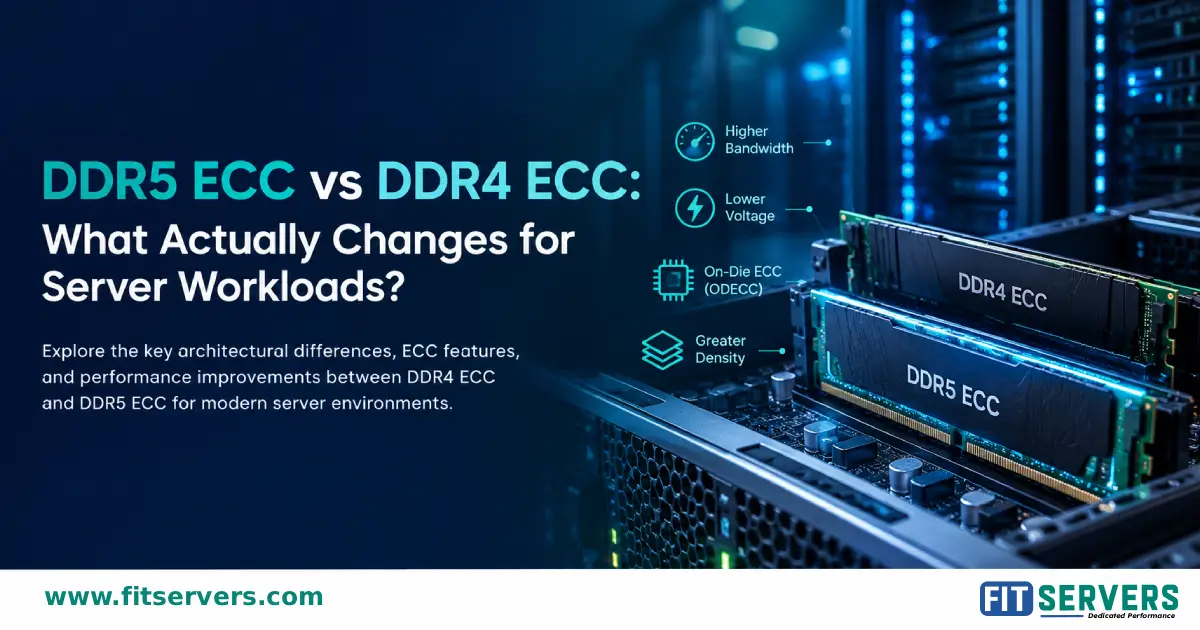
- Enterprise Memory (ECC RAM): When processing financial transactions or managing vital user databases, data integrity is non-negotiable. Premium bare-metal servers utilize Error-Correcting Code (ECC) memory. Available in dense DDR4 and DDR5 configurations ranging from 32GB up to massive 768GB+ arrays, ECC RAM actively detects and corrects internal data corruption on the fly.
Storage Infrastructure: Moving Beyond the SATA Bottleneck
- Enterprise NVMe SSDs: By completely bypassing the legacy SATA bus and utilizing direct PCIe lanes, NVMe drives deliver millions of IOPS (Input/Output Operations Per Second). They are essential for highly transactional SQL/NoSQL databases and ultra-fast caching layers.
- Data Center SATA/SAS SSDs: Perfect for high-traffic web servers and active file access, offering exceptional endurance and rapid read/write speeds without the premium cost of NVMe.
- High-Capacity SATA Arrays: For cold storage, big data archiving, and vast automated backup repositories, massive 7200 RPM SATA arrays provide economical, high-volume storage without sacrificing enterprise reliability.
3. The Global Network Advantage: Atlanta Routing Latency
When user experience is on the line, milliseconds matter. A major reason enterprises choose Atlanta is its ability to serve multiple diverse geographical markets from a single location with highly optimized routing. Below is a realistic breakdown of expected network round-trip times (RTT) when utilizing premium Tier-1 transit providers out of an Atlanta data center.
| Target Region / City | Average Latency (RTT) | Network Routing Context |
|---|---|---|
| Miami, FL (USA) | ~20 ms - 25 ms | Ultra-fast direct fiber down the East Coast. Matches the performance of hosting in Florida, without the hurricane risk. |
| New York, NY (USA) | ~20 ms - 25 ms | Direct interconnection to major NY/NJ financial hubs. Ideal for SaaS platforms serving East Coast corporate clients. |
| Chicago, IL (USA) | ~15 ms - 20 ms | Exceptional routing to the Midwest. Highly optimized for trading platforms connecting to Chicago mercantile exchanges. |
| London (UK) | ~80 ms - 90 ms | Clean transatlantic routing via subsea cables departing from East Coast landing stations. Highly acceptable for web and API traffic. |
| Frankfurt (Germany) | ~95 ms - 105 ms | Direct peerings to central Europe's largest internet exchange (DE-CIX), ensuring stable packet delivery to the EU mainland. |
| São Paulo (Brazil) | ~110 ms - 130 ms | Atlanta acts as a critical inland gateway to LATAM. Provides highly stable connections to South America via Florida subsea trunks. |
Note: Latency metrics are approximate and can fluctuate slightly based on your specific ISP, BGP routing updates, and the exact fiber path taken during transit.
4. High-Performance GPU Dedicated Servers
Standard CPUs excel at sequential processing, but for massive parallel workloads, they quickly become a severe bottleneck. The recent explosion of Artificial Intelligence, large language models (LLMs), deep learning, and remote workforce technologies has created an unprecedented demand for GPU computing.
It is vital to distinguish between consumer gaming GPUs (like the RTX 4090) and true enterprise accelerators. Consumer cards are prone to thermal throttling under 24/7 data center loads and crucially lack ECC memory. Premium Atlanta data centers provide strictly enterprise-grade NVIDIA Tesla GPU configurations:
- NVIDIA Tesla K80: Featuring a dual-GPU design with 24GB of GDDR5 memory. This card remains a highly cost-effective powerhouse for legacy CUDA-based applications, scientific simulations, and precision batch computing.
- NVIDIA Tesla M40: Built specifically for continuous deep learning and machine learning deployment. With 24GB of memory, it reduces the training times for complex neural networks from days to mere hours.
- NVIDIA Tesla M10: The ultimate hardware for Virtual Desktop Infrastructure (VDI). Featuring a quad-GPU board with 32GB of memory, it is engineered for VMware Horizon and Citrix Virtual Apps. A single M10 allows businesses to serve up to 64 concurrent high-performance virtual desktops to remote employees.
5. Network Capacity and DDoS Protection
A server is only as powerful as its connection to the outside world. Modern enterprise bandwidth requirements have evolved drastically over the last five years.
- The True Value of Unmetered Bandwidth: Bandwidth overage fees are a notorious hidden tax in the cloud hosting world. Premium Atlanta dedicated servers solve this by offering true unmetered bandwidth on dedicated ports. This means you are allocated a specific port speed (ranging from 1Gbps all the way up to 100Gbps). You can saturate that port 24/7, 365 days a year, without ever receiving a surprise bill for terabyte usage. This model is absolutely critical for Content Delivery Networks (CDNs), IPTV streaming architectures, and high-traffic software repositories.
- Edge-Level DDoS Mitigation: In today's landscape, cyber threats are a daily operational reality. Malicious volumetric Distributed Denial of Service (DDoS) attacks can easily cripple unprotected infrastructure. The best Atlanta servers include built-in, network-level DDoS mitigation. Suspicious traffic anomalies and volumetric floods are identified, scrubbed, and filtered at the network's edge. This ensures that only clean, legitimate traffic ever reaches your server's interface.
6. Real-World Use Cases for Atlanta Bare Metal
Who actually benefits from this level of heavy-duty infrastructure? Here are the most common enterprise deployments we see thriving in Atlanta facilities today:
- High-Traffic E-Commerce Platforms: Massive Magento, PrestaShop, or WooCommerce sites handling thousands of simultaneous checkouts during Black Friday cannot rely on shared cloud hosting. Dual Intel Xeon setups paired with NVMe RAID 10 arrays ensure zero database lag and instant page loads, directly preventing cart abandonment.
- Streaming and Media Delivery (CDN Nodes): Unmetered 10Gbps and 40Gbps ports allow media companies to distribute high-bitrate 4K video streams concurrently to thousands of East Coast and LATAM users without buffering.
- Big Data Analytics & AI: Utilizing high-core AMD EPYC servers paired with NVIDIA Tesla GPUs allows data scientists to ingest, process, and train machine learning models on massive datasets in a fully isolated, secure environment.
- Financial Technology (FinTech): The ~20ms latency to East Coast financial exchanges, combined with ECC memory and PCI-DSS compliance, makes Atlanta servers ideal for high-frequency trading algorithms and secure payment processing gateways.
7. Trust, Compliance, and Security
Premium Atlanta facilities adhere to rigorous Tier III standards. This classification mandates N+1 redundancy for power, cooling, and network uplinks, guaranteeing a minimum of 99.99% uptime. Furthermore, these data centers maintain SSAE 18 SOC 1 Type II and SOC 2 Type II compliance, proving their operational and security protocols have been heavily audited by independent third parties over a prolonged period. For e-commerce and FinTech platforms, PCI-DSS compliance ensures that the physical environment meets the stringent demands of the credit card payment industry.
Physical security is equally uncompromising. Access to the server floors is restricted via multi-factor biometric screening, interlocking man-traps, and 24/7 on-site security personnel. This guarantees your hardware remains completely isolated from unauthorized physical access at all times.
Conclusion: Future-Proof Your Enterprise Infrastructure
Scaling modern applications requires significantly more than just raw processing power; it requires a deeply strategic foundation. By choosing to deploy a dedicated server in Atlanta, you are securing an inland fortress for your data. You are wrapping your infrastructure in Tier III compliance, powering it with enterprise-grade silicon, and connecting it via ultra-low latency fiber to half the globe.
Whether you are migrating away from expensive, restrictive cloud ecosystems, deploying complex AI models, or building an impenetrable disaster recovery site, the hardware and network architecture available in Georgia is unparalleled.
8. Frequently Asked Questions (FAQ)
To provide maximum clarity for IT decision-makers, here are expert answers to the most common questions regarding Atlanta infrastructure:
Ready to elevate your enterprise infrastructure? Explore fully customizable, unmetered, and highly secure Atlanta dedicated servers to gain the ultimate competitive edge in your industry.