NTT Communications
A Tier 1 operator whose global IP backbone is among the biggest, offering quick, high-capacity routes. Its coverage runs deepest through Asia, North and South America, and Europe.


250+ data center locations worldwide

10 Tbps+ network capacity

60+ carriers, IXPs & ISPs

100% core network uptime
Our dedicated server network connects to major internet exchanges and multiple carriers in each region, with more than 10 Tbps of bandwidth capacity. Redundant core infrastructure supports 100% core network uptime, so your servers stay reachable when a single link or device fails.
Traffic reaches your users through a mix of global transit backbones, internet exchange peering and regional ISPs, including Cogent, Hurricane Electric, Lumen (formerly Level 3), GTT, Arelion (formerly Telia Carrier), NTT, LINX, DE-CIX, Colt and WebWerkz India. Having several routes to every region helps keep latency low and gives us alternative paths if one provider has an issue.
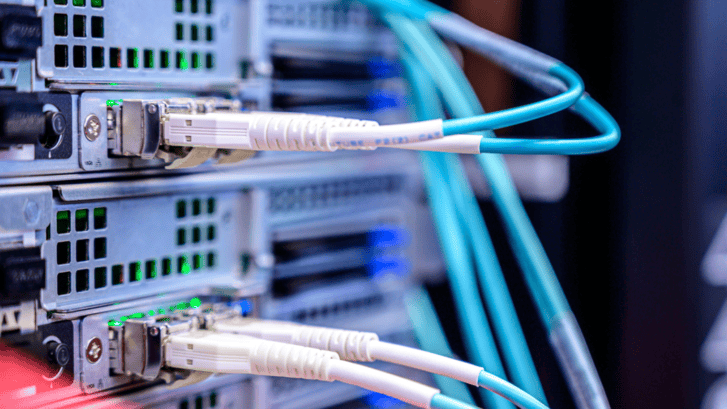

IP security and DDoS protection help safeguard your network, protect uptime and keep your customer experience consistent. See DDoS protection.

Fully redundant hardware at the router and distribution switch layers, plus multiple transit providers in each data center, supports our 100% core network uptime target.

Secure, dedicated IP access worldwide with fast provisioning, dependable performance and expert 24/7 support.
Much of the data crossing oceans and continents travels over the networks below. As Tier 1 operators, they exchange traffic with their peers directly instead of paying other networks for transit.
A Tier 1 operator whose global IP backbone is among the biggest, offering quick, high-capacity routes. Its coverage runs deepest through Asia, North and South America, and Europe.
Rebranded from CenturyLink. Its fiber footprint is huge and tightly meshed, it sells dedicated internet connections to businesses, and it is found in many of the leading facilities worldwide.
A Tier 1 internet provider operating in many countries and known for carrying huge traffic volumes. It concentrates on high-volume connectivity and transit for data-intensive applications.
Previously Telia Carrier. Its global IP backbone ranks among the biggest and best interconnected, and it is favored for dependable routing and path redundancy in the US and throughout Europe.
A digital infrastructure leader that owns a wide network of undersea fiber, using it to connect rapidly expanding markets to mature technology centers.
Runs a very large IPv6-focused transit network and is a fixture in how today’s internet is routed, with a presence at many exchange points worldwide.
Connectivity looks different on every continent, from dense fiber grids in North America to state-linked backbones in Asia. Local regulation and infrastructure decide which carriers matter most.
Mature, tightly meshed networks run by long-established telecoms alongside specialist enterprise fiber operators.
A cornerstone US carrier selling broad enterprise fiber coverage plus IP transit for data center customers.
Runs a big, secure worldwide IP network and provides highly available dedicated internet service across the continent.
A dark fiber specialist whose big network is aimed at data centers; known for wavelength services and private connectivity.
Goes beyond consumer broadband with enterprise fiber and Ethernet offerings that suit city-level and wider regional rollouts.
Packs the continent with fiber, so customers get diverse route options and solid edge networking.
A handful of large telecom groups own most of the subsea cable and long-haul terrestrial infrastructure that moves traffic around Latin America.
A leading Latin American telecom group offering enterprise connections and region-wide backbone capacity.
Operates land and undersea cable systems connecting South America with Europe as well as North America.
A Brazil-focused carrier central to domestic routing, links between data centers, plus satellite services.
Supplies core network capacity along with IP transit, anchoring connectivity at the southern end of South America.
A wide-reaching backbone in the region with dependable, quick transit.
A blend of big national incumbents and privately built fiber that crosses borders.
A French operator with a presence across Europe, supplying robust data transit.
A German operator whose IP network is among the most important across the heart of Europe, relied upon to link regional facilities.
Also operates a continent-wide fiber backbone, selling fast dedicated internet connectivity beyond its mobile business.
The UK’s main network infrastructure operator and a key link for London facilities and routes across the Atlantic.
Focuses on connecting businesses and data centers, linking Europe’s main commercial hubs over fiber with very little delay.
A backbone with outstanding connectivity inside Europe, a top choice for efficient routing between European networks.
Which carriers dominate varies by country, largely because of regulation, yet the names below reach across much of APAC.
Japan-headquartered; its networks inside Asia and over the Pacific rank among the biggest and most dependable.
A Singapore-based carrier serving as a key gateway for Southeast Asian traffic, supported by a large undersea cable system.
The main routes connecting India’s rapidly growing market to the global internet over land and undersea infrastructure.
The two state-owned operators generally required to carry business traffic reliably to and from the Chinese mainland.
A Hong Kong-headquartered international network linking Asia’s major finance and technology centers, with strong resilience.
Most international capacity reaches Australian data centers by subsea cable from Asia and from North America, run by a few leading domestic carriers.
Australia’s biggest network, holding a large share of the nation’s fiber and of its undersea links abroad.
The country’s second carrier, with good redundancy at home, links into data centers, and IP transit for business customers.
A significant Australian operator offering affordable fiber with plenty of capacity for business deployments.
Concentrates on dark fiber, links between data centers and fast IP transit, serving Australia as well as New Zealand.
Carrier availability varies by data center location.
A selection of the carriers, exchanges and ISPs our data centers connect to. Availability varies by location.




















What buyers usually ask about carriers, redundancy and DDoS protection before choosing a location.
Ask our team a questionOur data centers connect to multiple transit carriers, internet exchanges and regional ISPs. Global backbones include Arelion, Cogent, GTT, Hurricane Electric, Lumen and NTT, alongside exchanges such as DE-CIX, LINX and IX Reach, and regional carriers across North America, Europe and Asia-Pacific. The exact carrier mix varies by data center.
Carrier-neutral facilities host many network providers under one roof, usually connected through a Meet-Me Room. Instead of depending on one carrier, your traffic can reach the wider internet over several independent paths, which improves redundancy and gives us more routing options.
Each data center uses redundant network hardware, including routers and distribution switches, and multiple transit providers. If one path or device fails, traffic can shift to another without taking your server offline.
Network security and DDoS protection are part of our network design. Protection levels can differ by location and server plan, so contact our team to confirm what applies to the server and location you are considering.
Yes. If you need a specific carrier, an internet exchange or strong routing to a particular region, tell us before you order and we will recommend locations that fit. You can also browse all available locations to compare coverage.
Contact our team with your location, traffic profile and carrier requirements. We will confirm what is available at that data center and the best way to deploy it.
Talk to our team about locations, carriers and a network setup that fits your deployment.